
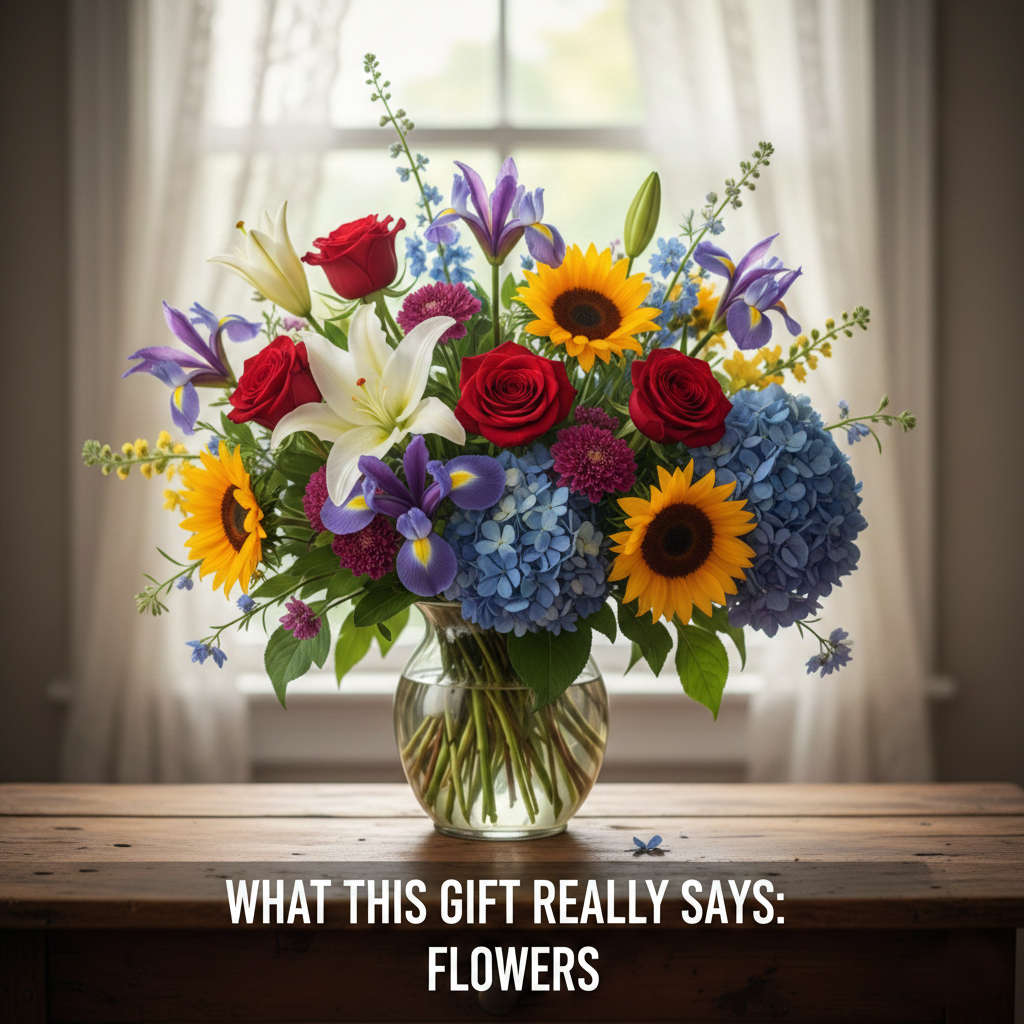
Flowers are the most emotionally fluent temporary gift.
They don’t solve problems.
They don’t last forever.
They don’t pretend to.
They simply say:
“This moment matters.”
And sometimes, that’s enough.
But flowers are rarely neutral. They amplify whatever is already present — love, apology, pride, grief, admiration. Which means the real message depends less on the bouquet and more on the timing.
The Surface Meaning: Beauty and Attention
On the surface, flowers communicate:
- I’m thinking of you.
- You deserve something beautiful.
- This moment deserves to be marked.
They interrupt the ordinary. A room changes when flowers enter it. The air feels intentional. Even silence feels softer.
That visual impact is why flowers remain one of the most universal gifts across cultures. They are emotional punctuation marks.
But punctuation can clarify — or exaggerate.
The Emotional Subtext: Spontaneity vs. Obligation
There’s a difference between:
- “I saw these and thought of you.”
- “I needed to show up with something.”
The receiver can usually tell.
A thoughtfully chosen arrangement feels like presence. A generic, last-minute bouquet can feel like performance. Not insincere — just unconsidered.
Flowers often miss when they’re used as emotional shortcuts. Especially in situations where conversation is required.
If flowers are replacing accountability, they stop feeling romantic and start feeling strategic.
And people feel that shift.
Why Flowers Work So Often
Despite their risks, flowers succeed because they are:
- Immediate
- Sensory
- Symbolic
- Temporary
Unlike jewelry — which implies permanence (as explored in What This Gift Really Says: Jewelry) — flowers acknowledge impermanence.
They say:
“Right now is what I’m honoring.”
That makes them powerful for:
- Early relationships
- Apologies that need softness
- Celebrations that don’t require lifelong symbolism
- Friendships (especially unexpected ones)
- Encouragement during difficult seasons
Flowers show effort without escalating commitment.
That’s their emotional advantage.
How to Give Flowers Well
If you’re giving flowers, elevate them from expected to intentional.
1. Match Personality, Not Tradition
Roses aren’t mandatory.
In fact, default red roses can sometimes feel scripted rather than sincere.
Ask instead:
- Do they prefer muted tones or bold colors?
- Are they minimalist or expressive?
- Do they love wild, imperfect beauty — or structured elegance?
Alignment communicates attention.
And attention communicates care.
2. Consider Longevity as Part of the Message
Fresh flowers say, “This moment.”
Preserved or dried arrangements say, “I wanted this to last longer.”
Long-lasting preserved rose boxes or dried botanical arrangements available through reliable retailers like Amazon subtly extend the symbolism without escalating emotional pressure.
If you want something more handcrafted or personalized — like birth-month bouquets, pressed flower art, or custom floral keepsakes — platforms like Etsy align beautifully with meaningful gifting (especially once you’re ready to link directly).
The key isn’t extravagance.
It’s intention.
3. Always Include Words
Flowers without a note are incomplete sentences.
Even one line changes everything:
- “For no reason.”
- “I’m proud of you.”
- “I know this week was heavy.”
- “I love watching you grow.”
Without context, flowers decorate.
With context, they communicate.
Specificity is where meaning lives.
When Flowers Feel Thoughtful
Flowers land beautifully when:
- They’re unexpected
- They reflect actual taste
- They mark a real emotional moment
- They’re paired with sincerity
They feel especially powerful in friendships, where they break social expectations and signal appreciation without romance.
They say:
“I paused for you.”
When Flowers Feel Performative
Flowers can feel hollow when:
- They show up only after conflict
- They’re repeatedly used instead of conversation
- They ignore allergies or preferences
- They feel obligatory (holidays, anniversaries without thought)
The issue isn’t the bouquet.
It’s the emotional pattern.
The Quiet Truth About Flowers
Flowers are not about permanence.
They’re about presence.
They say:
“This moment deserves beauty.”
And beauty, even temporary, can be powerful.
Given thoughtfully, flowers feel tender.
Given carelessly, they feel like etiquette.
The difference isn’t price.
It’s awareness.
❓ FAQs About Giving Flowers
Are flowers only appropriate for romantic relationships?
No. Flowers can express appreciation, encouragement, sympathy, or celebration. The meaning depends more on context and wording than the bouquet itself.
Are flowers a generic gift?
They can be — if chosen without thought. Matching color, style, and tone to the recipient transforms flowers from default to deliberate.
Do flowers need to be expensive to feel meaningful?
No. Meaning comes from intention and presentation. Even a modest bouquet paired with thoughtful words can feel deeply personal.
Are preserved flowers better than fresh ones?
It depends on the message. Fresh flowers honor a moment. Preserved arrangements extend symbolism and longevity. Neither is inherently better — just different emotionally.



Add comment