
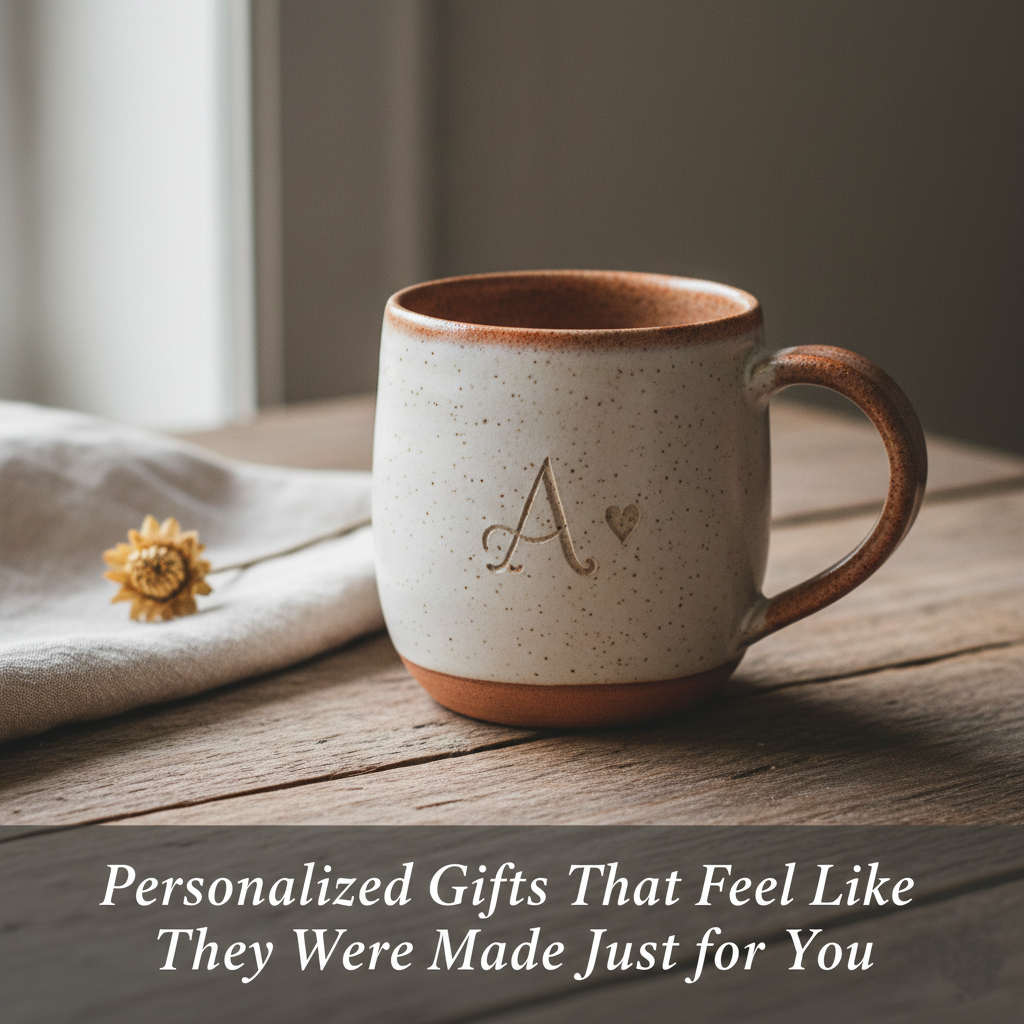
Why customization feels intimate when it’s done right
There’s a particular reaction people have when they realize a gift wasn’t just chosen—but considered.
It’s subtle. A pause. A shift in posture. A quiet smile that comes from recognition rather than surprise.
Personalized gifts, when done well, don’t announce themselves loudly. They don’t rely on novelty. They work because they collapse distance. They make someone feel known.
But not all personalization is equal. Some versions feel mechanical. Others feel deeply human.
The difference lies in intention.
Personalization is not about adding a name—it’s about adding attention
At its core, personalization isn’t a feature. It’s a form of attention.
True personalization answers an unspoken question:
“Did you think about me specifically?”
A gift engraved with a name can feel generic if it’s the only thought involved. Meanwhile, a gift without any customization at all can feel deeply personal if it reflects insight, memory, or emotional understanding.
Personalization works best when it grows out of context, not convenience.
Why we crave being seen (especially through gifts)
Feeling seen is one of the most basic human needs.
We want confirmation that we’re understood beyond surface labels. Gifts become one of the quiet ways this need is met—especially in relationships where words don’t always come easily.
A personalized gift communicates:
- You noticed something specific
- You remembered something small
- You made a decision with me in mind
That message often matters more than the object itself.
The emotional difference between “custom” and “considered”
Modern gifting offers endless customization options. But emotional personalization is not the same as technical customization.
A technically customized gift might include:
- A name
- A date
- A preset option selected from a menu
A considered gift reflects:
- Taste
- History
- Inside knowledge
- Emotional timing
The latter feels personal even when no literal customization is involved. The former only works emotionally when it’s paired with thought.
This is why some personalized gifts fall flat—and others feel unforgettable.
Independent creators elevate personalization into dialogue
One of the reasons personalized gifts feel more meaningful when they come from independent creators is that personalization often becomes a conversation, not a checkbox.
Customization isn’t automated—it’s intentional.
It may involve:
- Choosing colors that reflect someone’s style
- Adjusting details based on a story you share
- Creating something that wouldn’t make sense for anyone else
That dialogue embeds care into the object. The gift becomes a response, not just a product.
Why personalization feels especially powerful in close relationships
In close relationships, gifts often serve as emotional shorthand.
We don’t give gifts to explain ourselves—we give them to express something that already exists.
Personalized gifts work well here because they:
- Acknowledge shared history
- Reference private meaning
- Reinforce emotional closeness
They don’t need to be dramatic. Often, the most powerful personalized gifts are quiet and specific enough that only the recipient fully understands them.
That exclusivity is part of their emotional weight.
When personalization helps during emotionally charged moments
Certain life moments heighten our sensitivity to meaning:
- Milestones
- Transitions
- Loss
- New beginnings
During these times, generic gifts can feel insufficient—not because they’re wrong, but because they don’t meet the emotional moment.
Personalized gifts meet people where they are.
They say:
“I see this moment, and I see you inside it.”
That recognition can be grounding when everything else feels uncertain.
Why “made for you” matters more than “perfect”
Perfection is impressive.
Specificity is intimate.
Personalized gifts often carry small imperfections—choices that wouldn’t appeal to everyone. That’s exactly why they work.
They weren’t meant to impress a room.
They were meant to reach one person.
That intention shifts the emotional frame from evaluation to connection.
Personalization without excess
There’s a misconception that personalization must be elaborate or expensive to matter.
In reality, emotional personalization often thrives under restraint.
It can be:
- A color choice that feels right
- A phrase that carries private meaning
- A detail that aligns with someone’s habits or values
When money is limited, personalization becomes even more powerful. It allows a gift to feel full without being large, meaningful without being costly.
When personalization becomes a form of respect
At its best, personalization is an act of respect.
It says:
- I didn’t assume
- I didn’t generalize
- I didn’t rush
Instead, you paused. You paid attention. You made space for specificity.
That respect doesn’t disappear once the gift is opened. It stays attached to the object, shaping how it’s remembered and used.
Why we hold onto personalized gifts longer
People are slower to let go of gifts that feel personal.
Not because they’re more useful—but because they’re harder to replace emotionally.
A personalized gift doesn’t just occupy space. It carries identity. It reflects a relationship at a specific moment in time.
Letting go of it feels like letting go of a memory.
Personalization as emotional honesty
There’s a quiet vulnerability in giving a personalized gift.
You’re saying:
“This is what I think matters about you.”
That statement risks being wrong. But it also opens the door to genuine connection.
When personalization is guided by care rather than performance, it becomes a form of emotional honesty—and that honesty is what people respond to.
Choosing personalization is choosing presence
Ultimately, personalized gifts feel like they were made just for someone because they were shaped by presence.
Presence in noticing.
Presence in choosing.
Presence in intention.
Whether the gift is custom-made, carefully selected, or subtly tailored, what matters is not how unique it is—but how attentive it feels.
And attention, when given freely and thoughtfully, is one of the most meaningful things we can offer.
If the idea of personalization as emotional attention resonates with you, you may enjoy exploring What This Gift Really Says —a series that looks at how different kinds of gifts communicate meaning beyond their surface.




Add comment